
Blueface Angelfish

Blueface Angelfish for Sale – A Striking and Regal Angel for Large Saltwater Aquariums
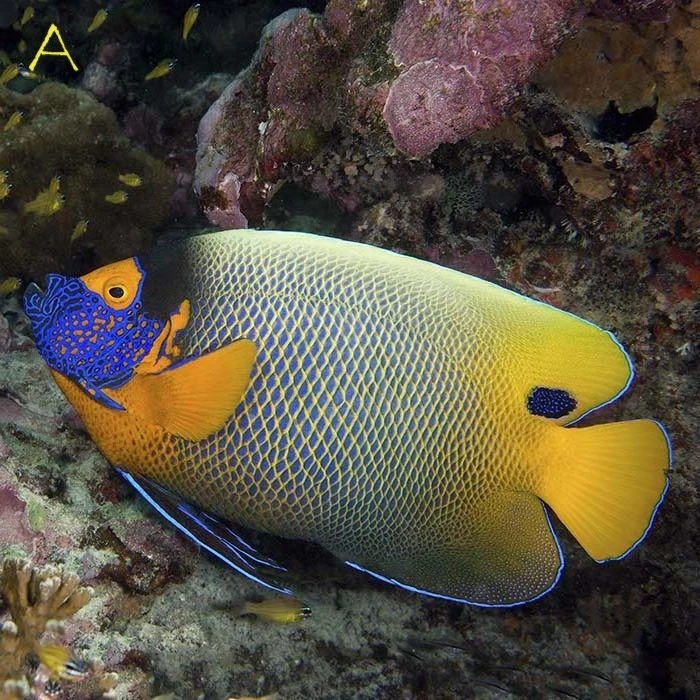
Few angelfish in the marine hobby combine size, color, and sheer presence as effectively as the Blueface Angelfish (Pomacanthus xanthometopon). With its vivid mosaic patterning, bold yellow and blue facial markings, and commanding adult form, this Indo-Pacific species is one of the most recognizable and sought-after large angelfish available to dedicated marine aquarists. At Dr. Reef Quarantined Fish, every Blueface Angelfish is fully quarantined and confirmed eating before it ships to you.
A Regal Presence on the Reef
The Blueface Angelfish is native to the Indo-Pacific, ranging from the Maldives and Sri Lanka across to the waters of the western Pacific and northern Australia. It inhabits rich coral reef environments, typically in areas with abundant sponge growth, coral cover, and clear, well-oxygenated water. In the wild it is a bold and territorial fish that establishes a defined home range and patrols it with confidence throughout the day. That assertive, self-assured character carries directly into the aquarium, where the Blueface Angel tends to become the dominant personality in any system it inhabits.
Appearance and Size
The Blueface Angelfish undergoes a remarkable color transformation from juvenile to adult. Juveniles display the classic white and blue striped pattern common to several Pomacanthus species, while adults develop an intricate mosaic of yellow scales edged in blue across the body, a vivid blue and yellow facial mask, and a clean yellow dorsal and tail fin region that gives the species its common name. The transition between these two forms passes through a series of intermediate patterns that make growing this species from juvenile to adult one of the most visually rewarding experiences in the hobby. Adults typically reach 12 to 15 inches in length, making this a large and commanding fish that requires a suitably scaled system.
Aquarium Requirements
The Blueface Angelfish requires a large, mature, and stable marine aquarium. A minimum of 220 gallons is recommended, with larger systems being strongly preferable for adult specimens. The aquarium should provide abundant live rock with caves, overhangs, and shaded areas that reflect the natural structure of the reef environments this species inhabits. Strong biological filtration, consistent water parameters, and low nitrate levels are essential. This species is sensitive to declining water quality and does not adapt well to unstable or immature systems, making a well-established aquarium managed by an experienced aquarist the appropriate home for this fish.
Feeding
The Blueface Angelfish is an omnivore with a natural diet that includes sponges, tunicates, algae, and small invertebrates. In captivity it generally adapts well to prepared foods once settled and becomes a confident, enthusiastic feeder in a stable environment. High-quality angelfish preparations containing sponge material, frozen mysis shrimp, marine algae, and enriched frozen foods all form a strong dietary foundation. Offering varied foods multiple times per day supports long-term health, immune function, and the maintenance of its striking adult coloration.
Temperament and Tank Compatibility
The Blueface Angelfish is semi-aggressive and will assert dominance in a community aquarium. It is best introduced as one of the last fish added to an established system, and tank mates should be chosen to avoid smaller or more timid species that may be consistently intimidated. It can show significant aggression toward other large angelfish, so housing multiple angels together requires careful planning and a generously sized system. Like most large angelfish, it is not considered reef safe and will graze on soft corals, large polyp stony corals, and sessile invertebrates. It performs best in a fish-only with live rock system or a carefully managed reef where coral selection accounts for the angelfish’s natural grazing behavior.
Why Buy from Dr. Reef
At Dr. Reef Quarantined Fish, every Blueface Angelfish undergoes an extended quarantine and observation period before being offered for sale. Each fish is treated prophylactically for common marine parasites, monitored carefully for health and appetite, and confirmed eating a varied diet of prepared foods before it ships. We do not offer a fish for sale until it is actively feeding and visibly thriving in our care. That preparation gives this regal and visually spectacular species the strongest possible foundation in your system.