
Fu Manchu Lionfish

Fu Manchu Lionfish for Sale – A Rare and Ornate Predator for Species-Specific Marine Tanks
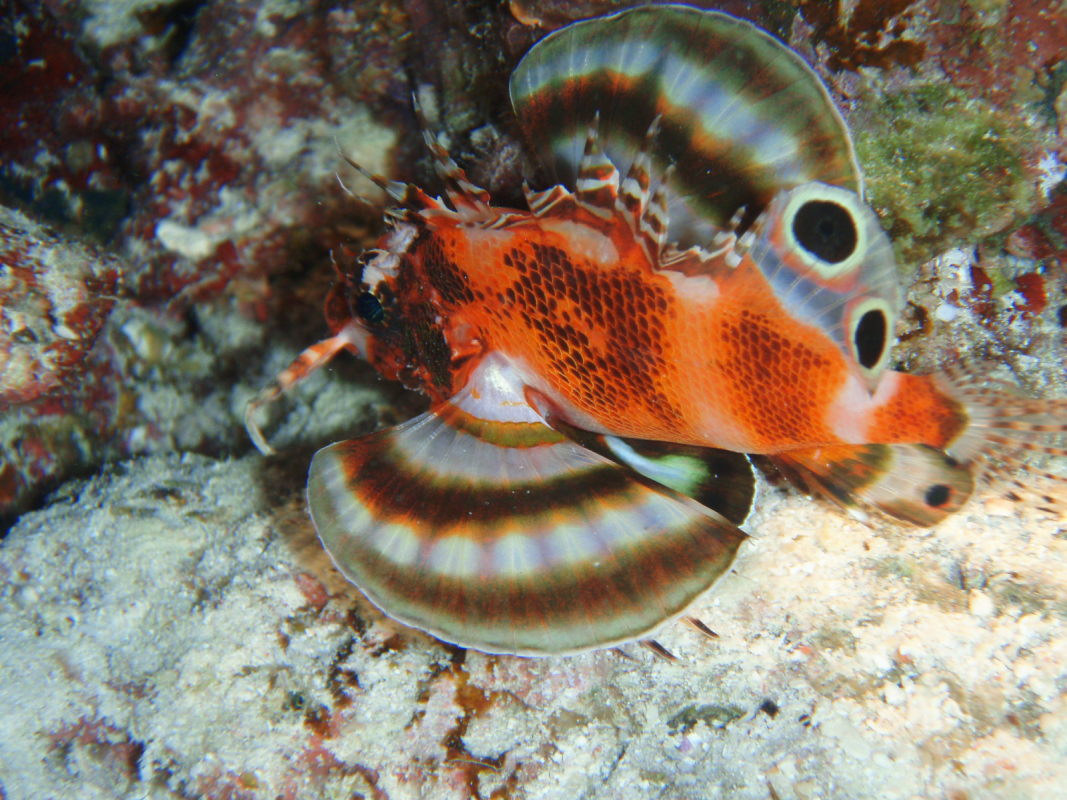
Few fish in the marine hobby combine rarity, dramatic appearance, and predatory character quite like the Fu Manchu Lionfish (Dendrochirus biocellatus). With its elaborate finnage, distinctive facial tentacles, and bold patterning, this small but striking species is one of the most sought-after lionfish available to dedicated marine aquarists. At Dr. Reef Quarantined Fish, every Fu Manchu Lionfish is fully quarantined and confirmed eating before it ships to you.
A Lionfish Unlike Any Other
The Fu Manchu Lionfish is native to the Indo-Pacific, inhabiting coral-rich reef environments where it spends much of its time tucked into crevices, beneath ledges, and among branching corals. Unlike larger lionfish species that actively patrol the water column, the Fu Manchu is a slow, deliberate ambush predator that relies on camouflage and patience to hunt. It is primarily nocturnal, becoming more active after dark as it ventures out to stalk small prey along the reef. This secretive, methodical behavior makes it a fascinating species to observe in a well-designed aquarium that provides plenty of structure and hiding opportunities.
Appearance and Size
The Fu Manchu Lionfish is immediately recognizable by the two elongated, whisker-like tentacles above its mouth that inspired its common name. The body is richly patterned with red, white, and brown banding, and the elaborate pectoral and dorsal fins are adorned with intricate spotting and feathering that give this species an almost ornamental quality. Two distinctive eyespots on the dorsal fin are believed to serve as a defensive false-eye pattern. Adults typically reach 5 to 6 inches in length, making this one of the smaller lionfish species available in the hobby and well suited to dedicated predator systems that do not require the scale of a large lion tank.
Aquarium Requirements
The Fu Manchu Lionfish is best suited to a species-specific or carefully curated predator aquarium. A minimum of 50 to 75 gallons is recommended, with the aquarium arranged to provide plenty of caves, overhangs, and shaded hiding spots where the fish can rest comfortably during daylight hours. Live rock arranged to create a naturalistic reef structure suits this species well and encourages the most natural behavior. Water quality must be consistently maintained, as lionfish are messy eaters and produce significant waste. A robust protein skimmer, strong biological filtration, and regular water changes are essential components of any lionfish system.
Feeding
One of the primary challenges of keeping the Fu Manchu Lionfish is transitioning it from live prey to frozen foods. In the wild this species feeds on small fish and crustaceans, and newly acquired specimens often show little interest in anything that is not moving. Weaning this species onto frozen foods requires patience and a methodical approach. Offering live ghost shrimp or small feeder shrimp initially, then gradually introducing frozen mysis shrimp or silversides using a feeding stick to simulate movement, is the most reliable method for making the transition. Once established on frozen foods, the Fu Manchu becomes a straightforward and rewarding feeder.
This is one of the most important reasons to purchase from Dr. Reef Quarantined Fish. We do not offer a Fu Manchu Lionfish for sale until it is actively accepting frozen foods. That single step removes the most significant hurdle most hobbyists face with this species.
Temperament and Tank Compatibility
The Fu Manchu Lionfish is not reef safe in the traditional sense. It will consume small fish and crustaceans that fit within its mouth, making careful selection of tank mates essential. It is best housed with larger, robust fish that pose no threat and are too large to be considered prey. Dottybacks, larger wrasses, groupers, and other medium to large predatory species can make compatible companions in a well-planned system. Invertebrates such as shrimp and small crabs will not survive in the same aquarium. Despite its predatory nature, the Fu Manchu is not aggressive toward fish it cannot eat and generally coexists peacefully with appropriate tank mates.
Handling and Venom
Like all lionfish, the Fu Manchu Lionfish possesses venomous dorsal, pelvic, and anal spines that can deliver a painful sting if handled carelessly. While the venom of this smaller species is generally considered less severe than that of larger lionfish, it should still be treated with full respect. Caution should be exercised during acclimation, tank maintenance, and any situation that requires working near the fish. Using long aquarium gloves and tools during maintenance reduces the risk of accidental contact significantly.
Why Buy from Dr. Reef
The Fu Manchu Lionfish is a rare and high-value species that deserves the highest standards of care from the point of collection through to delivery. At Dr. Reef Quarantined Fish, every Fu Manchu undergoes an extended quarantine and observation period before being offered for sale. Each fish is treated prophylactically, monitored closely for health and appetite, and trained onto frozen foods before it ships. That preparation eliminates the most common points of failure with this species and gives you every advantage for long-term success with one of the most ornate and captivating fish in the hobby.
One thought on “Fu Manchu Lionfish”