
Atlantic Blue Tang

Atlantic Blue Tang for Sale – A Classic and Iconic Species for Large Marine Aquariums
Few fish in the marine hobby carry the same instant recognition as the Atlantic Blue Tang (Acanthurus coeruleus). With its vivid blue coloration, oval body, and active presence in the water column, it is a species that brings energy and color to any large saltwater aquarium. At Dr. Reef Quarantined Fish, every Atlantic Blue Tang is fully quarantined and confirmed eating before it ships to you.
A Fish Built for Open Water
The Atlantic Blue Tang is native to the western Atlantic Ocean, ranging from the coast of Florida and the Gulf of Mexico down through the Caribbean and into the waters of Brazil. It inhabits coral reefs and rocky outcroppings, typically in areas with strong water movement and plenty of open swimming space. In the wild it is a highly active fish, constantly moving through the water column and grazing on algae from reef surfaces. That energetic nature makes it a lively and engaging presence in the home aquarium.
Appearance and Size
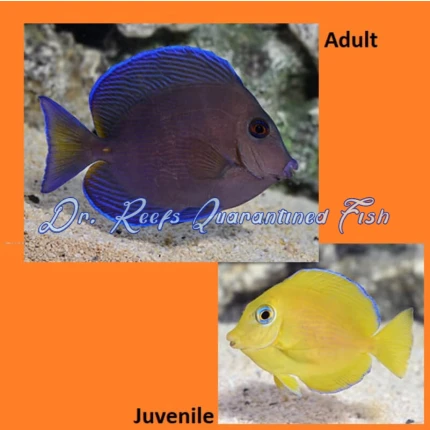
Juvenile Atlantic Blue Tangs are bright yellow, gradually transitioning through a mottled yellow and blue phase before developing their full adult coloration of rich, deep blue with a yellow tail spine. This color transformation is one of the most dramatic in the hobby and makes juvenile specimens particularly striking to observe as they mature. Adults typically reach 9 to 15 inches in length, making them a substantial fish that requires generous swimming space to thrive.
Aquarium Requirements
The Atlantic Blue Tang is an active, open-water swimmer and requires a large aquarium to remain healthy and stress free. A minimum of 180 gallons is recommended, with tanks of 250 gallons or more being ideal for adult specimens. Strong, consistent water flow is important, as this species is accustomed to high-energy reef environments. Water quality must be maintained carefully, as tangs are susceptible to ich and other skin conditions when kept in suboptimal conditions or under stress. A well-established system with stable parameters and excellent filtration gives this species the best environment to flourish.
Feeding
The Atlantic Blue Tang is primarily a herbivore in the wild, spending much of its time grazing on filamentous algae and organic matter from reef surfaces. In captivity it should be offered a diet rich in plant-based foods. Dried seaweed sheets, high-quality herbivore pellets, and frozen preparations containing spirulina and marine algae are all excellent staples. Supplementing with meaty foods such as mysis shrimp helps round out the diet and supports immune health. Regular feeding with varied offerings keeps this species in top condition and reduces the likelihood of nutritional deficiencies.
Temperament and Tank Compatibility
The Atlantic Blue Tang is generally peaceful toward other species but can show aggression toward other tangs, particularly those of similar body shape. In larger systems with plenty of open space, this territorial behavior is usually manageable, but introducing multiple tang species requires careful consideration. It coexists well with a wide range of reef fish and is considered reef safe, posing no threat to corals or most invertebrates. The scalpel-like spine at the base of its tail is a natural defense mechanism and should be handled with care during transport and acclimation.
Why Buy from Dr. Reef
Tangs are among the fish most commonly lost to ich and stress-related illness when purchased without proper preparation. At Dr. Reef Quarantined Fish, every Atlantic Blue Tang goes through an extended quarantine and observation period before being offered for sale. Each fish is treated prophylactically, monitored closely for signs of disease, and confirmed eating a variety of foods before it ships. That process significantly reduces the risk of introducing illness into your display tank and gives your new fish the best possible start.