
Blue Velvet Nudibranch

Blue Velvet Nudibranch – A Stunning and Delicate Addition to a Reef Aquarium
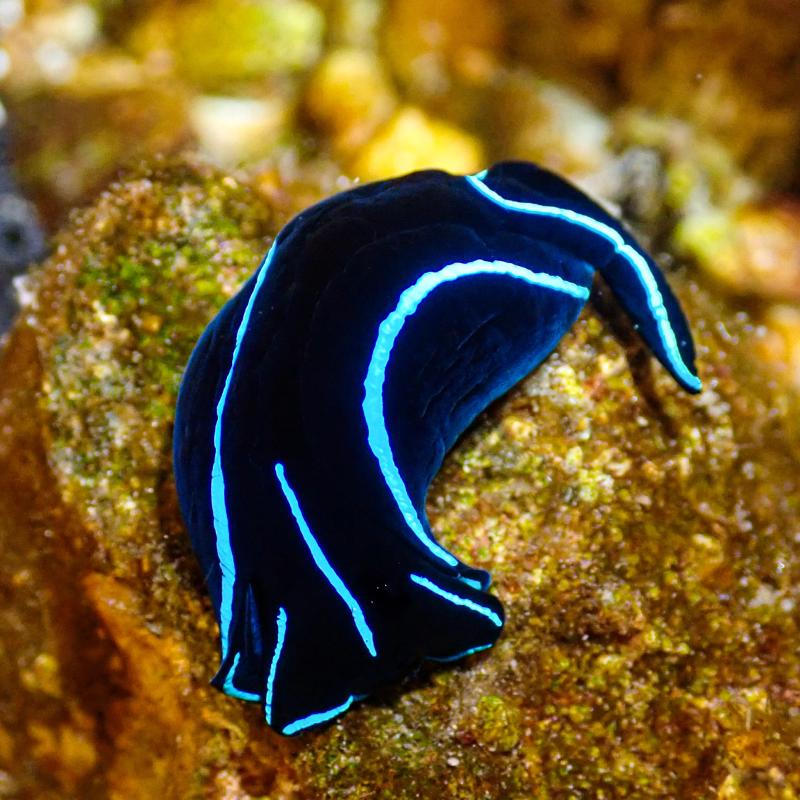
The Blue Velvet Nudibranch is one of the most visually striking invertebrates available to marine aquarium hobbyists. With its deep black body, electric blue lines running along its edges, and distinctive hammer-shaped head, it is a creature that immediately draws attention in any reef tank. Beyond its beauty, it also serves a highly practical purpose: controlling flatworm infestations. However, keeping one successfully requires a good understanding of its specific needs, limitations, and lifespan.
What Is the Blue Velvet Nudibranch
Despite being widely referred to as a nudibranch, the Blue Velvet Nudibranch (Chelidonura varians) is technically a headshield sea slug belonging to the order Cephalaspidea rather than a true nudibranch. It is found naturally throughout the Indo-West Pacific region, including coral reefs, lagoons, and sandy or silty habitats at shallow depths. Its two distinctive tail-like appendages at the rear, one always longer than the other, give it an unmistakable silhouette that makes it one of the more unusual and captivating invertebrates in the hobby.
Why Hobbyists Keep Them
The primary reason most reef keepers introduce a Blue Velvet Nudibranch into their aquarium is flatworm control. This species feeds almost exclusively on flatworms, particularly red planaria, using a tube-like proboscis to suck them up with remarkable speed and efficiency. Hobbyists who have dealt with flatworm infestations report that a single specimen can clear a noticeable area of flatworms within as little as 30 minutes of being introduced to the tank. They hunt by following the chemical trails left by flatworms, making them highly effective targeted pest controllers.
It is important to note, however, that once the flatworm population is depleted, the Blue Velvet Nudibranch will starve unless additional flatworms are sourced. This species is a specialist feeder that will not readily accept alternative foods in most cases, which is one of the key challenges of keeping it long term.
Aquarium Requirements
The Blue Velvet Nudibranch is best suited to a well-established reef aquarium of at least 20 gallons with plenty of live rock, open sand areas, and a healthy flatworm population to sustain it. Because it is almost entirely nocturnal, it will spend much of the day resting and becomes most active after the lights go down.
Water quality is critical for this species. It is highly sensitive to rapid changes in water parameters and cannot tolerate copper in any amount. Ideal water conditions include a temperature range of 72 to 78 degrees Fahrenheit, a pH of 8.1 to 8.4, and a specific gravity of 1.023 to 1.025. Nitrate levels should be kept low, and many experienced hobbyists recommend running activated carbon to help maintain water quality and manage any toxins the slug may release.
Flow and Safety Considerations
One of the most important practical considerations when keeping a Blue Velvet Nudibranch is water flow. This species has very little tolerance for strong or turbulent flow, particularly when it is small. Wavemakers and powerheads should be reduced or repositioned to create calmer areas at the substrate level where the nudibranch spends most of its time. All pump intakes, drains, and powerhead openings should be screened off, as the nudibranch is capable of climbing aquarium walls and can easily be drawn into equipment and injured.
Blue Velvet Nudibranchs must be drip acclimated slowly before being introduced to the aquarium. They should always be added with the main lights off to reduce stress during the transition. Avoid exposing them to bright light immediately after opening the shipping bag.
Lifespan and Realistic Expectations
This is where hobbyists need to be realistic. The Blue Velvet Nudibranch has a naturally short lifespan, with most specimens living only around three months in captivity. Breeding occurs relatively easily when more than one is kept together, as they will regularly lay eggs in mucus-wrapped spirals on the sand. However, successfully raising the larvae past the early stages has proven extremely difficult and has rarely been achieved by hobbyists.
If a Blue Velvet Nudibranch dies in the aquarium, it must be removed immediately. Dead specimens release toxins into the water that can be harmful to other tank inhabitants.
Is It Right for Your Aquarium
The Blue Velvet Nudibranch is best suited to experienced reef keepers who have an active flatworm problem and the knowledge to provide stable water conditions and appropriate flow management. It is not a beginner species, and it is not a long-term resident in most aquariums. Think of it as a targeted, temporary solution to a specific pest problem rather than a permanent addition.
For hobbyists who are ready to take on the challenge, sourcing a healthy and well-conditioned specimen from a trusted provider like Dr. Reef’s Quarantined Fish gives this beautiful creature the best possible chance of thriving from the moment it enters your tank.