
What Is a Coral Frag?

What Is a Coral Frag? Everything You Need to Know Before Buying Your First One
If you’ve spent any time around the reef aquarium hobby, you’ve heard the word “frag” thrown around constantly. Frag swap. Frag pack. Fragging technique. Frag plug. It’s one of those terms that experienced reefers use so casually that beginners often feel too intimidated to ask what it actually means.
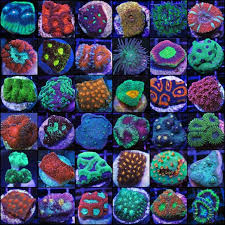
A coral frag, short for fragment, is a small, deliberately cut or broken piece of a coral colony that has been mounted on a plug or disk to grow independently. Think of it like a cutting from a plant. You snip a branch, put it in water, and it takes root and grows into a whole new plant. Coral fragging works on the same principle, except underwater, and with infinitely more color.
But there’s a lot more to coral frags than just the definition, and understanding the full picture will help you make smarter choices as a reef hobbyist, shop more confidently, and set your tank up for long-term success.
Types of Coral Frags at Dr. Reef’s Quarantined Fish
One of the most remarkable things about Dr. Reef’s coral frag collection is the sheer diversity. Here’s a breakdown of what’s available and what each type brings to a reef tank:
Acropora
The undisputed king of SPS (Small Polyp Stony) corals and the centerpiece of countless high-end reef tanks. Acropora are branching, plating, or table-forming stony corals known for dazzling colors and fast growth when conditions are right. They’re demanding high light, high flow, and pristine water, but the payoff is spectacular.
Dr. Reef’s Acropora collection features named collector’s pieces including Candyland, Cherry Blossom, Cherry Bomb, Fruity Pebbles, Lady in Pink, Miyagi Tort, Fox Flame, Golden Goose Millepora, Monsters Inc Millepora, Kermit the Frog Tort, Australian Delicate, Bill Murray, Blue Raspberry Millepora, Blue Voodoo, Cali Tort, Crimson, Martian Sunrise, Orchid Berry, and many more. Prices range from $29.99 for entry-level frags to $209.99 for rare, collector-grade pieces like the Lady in Pink.
Montipora
Another beloved SPS coral, Montipora, comes in plating, encrusting, and branching forms. More forgiving than Acropora, it’s an excellent entry point for hobbyists moving into SPS keeping. The color range is enormous reds, oranges, greens, purples, and multicolored morphs.
Chalice
Large Polyp Stony (LPS) corals with a flat, plate-like growth form. Chalice corals are known for extraordinary color complexity, often showing multiple colors, patterns, and fluorescent highlights in a single frag. They’re conversation-starting corals that photograph brilliantly.
Favia
A classic LPS coral with dome-shaped or encrusting growth and large, clearly defined polyps. Favia corals are hardy, moderately demanding, and available in an enormous range of colors. Great mid-difficulty corals for building tank depth and texture.
Zoas / Zoanthids
The entry point for most new coral keepers, and honestly, still exciting for experienced reefers who’ve been in the hobby for years. Zoanthids grow in colonies of small, disk-shaped polyps that can be vibrantly colored in ways that seem almost impossible for a living organism. Collector Zoa morphs have names that read like album titles. The frag swap culture named Zoa morphs is one of the most active in the reef hobby.
Hammer Corals
Among the most popular LPS corals in the hobby. Hammer corals grow long, fleshy sweeper tentacles that wave in the current, each tipped with a T-shaped head that actually does look like a tiny hammer. They’re captivating in motion and add incredible life and movement to reef tanks.
Frogspawn
The third member of the Euphyllia family, alongside hammers and torches. Frogspawn produces clusters of rounded, tentacle-tipped heads that genuinely resemble a mass of frog eggs. A classic LPS with beautiful flow and good temperament.
Mushrooms / Rhodactis
Soft, flat, disk-shaped corals that are among the easiest to keep in the reef hobby. Mushrooms can tolerate lower light and less perfect water conditions than most stony corals, making them excellent for beginners. They spread readily and come in colors ranging from plain brown to electric blue.
Blastomussa
Round, bubble-like LPS corals with large, prominent polyps in rows or clusters. They’re moderately easy to keep, visually impactful, and come in rich colors. Good mid-tier corals for adding texture to the rockscape.
Lobophyllia
Brain-patterned LPS corals with a convoluted surface and large, fleshy polyps. Lobos are hardy, visually interesting, and tolerant of a fairly wide range of conditions for LPS corals.
Goniopora
The “flower pot coral” is so named for the long, extended polyps that make a healthy Goniopora colony look like a bouquet waving in the current. They require some experience but are breathtaking when thriving.
Cyphastrea
Compact, encrusting LPS corals with small, densely packed polyps. Cyphastrea are known for being relatively tough and for displaying bright fluorescent colors under reef-spectrum lighting.
Diploastrea
A dome-forming LPS coral with a honeycomb-patterned surface. Less common in the hobby than some other LPS corals, but hardy and visually interesting.
Lepto
Leptastrea is a small-polyp encrusting coral that stays close to the substrate and comes in a range of bright colors. It’s a compact, easy-to-place coral that works well filling gaps in a rockscape.
Stylophora
Another branching SPS coral, Stylophora, is slightly more forgiving than Acropora and comes in a range of colors, including pink, purple, yellow, and green. Good entry-level SPS coral.
The Bottom Line
A coral frag is a small piece of a larger coral colony, mounted on a plug and grown independently. Simple concept but rich with implications for your tank, your wallet, the reef hobby community, and the health of coral reefs worldwide.
When you shop for coral frags at Dr. Reef’s Quarantined Fish, you’re buying from a collection of quarantined frags from entry-level Zoas and Mushrooms to collector-grade Acropora morphs. Every frag has been inspected, treated, and confirmed clean before shipping, protecting your established tank from the pests and hitchhikers that make unquarantined coral purchases such a gamble.
Start small, start smart, start quarantined. That’s the path to a reef tank that grows more beautiful every single year.