
What Do Black Ribbon Eels Eat?

What Do Black Ribbon Eels Eat? The Complete Feeding Guide
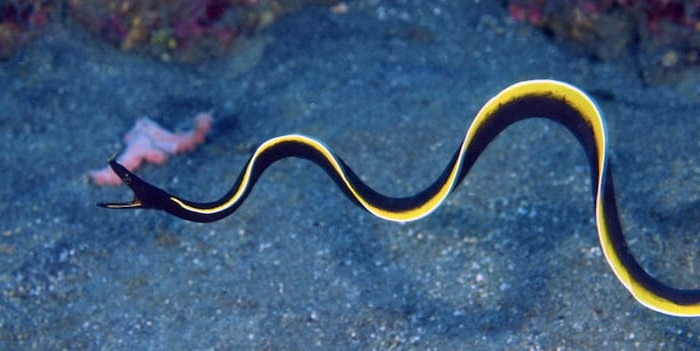
You see it at your local fish store, a sleek black ribbon eel with brilliant yellow fins and mesmerizing nostrils flaring in the current. It’s one of the most striking creatures you’ve ever seen in a marine aquarium, moving with an almost hypnotic grace that makes you stop and stare. The price tag is significant, but you’re captivated. Then the store employee sees your interest and says those words that should make every aquarist pause: “They’re extremely difficult to feed.”
Understanding what black ribbon eels eat, how they eat, and most importantly, how to transition them from their natural predatory behavior to accepting prepared foods in captivity can mean the difference between success and heartbreak. Let’s dive deep into the feeding requirements, challenges, and strategies that can help you keep one of these magnificent creatures thriving.
The Natural Diet of Black Ribbon Eels
In their natural Indo-Pacific reef habitats, black ribbon eels are specialized predatory carnivores with very specific feeding behaviors. They spend most of their time with their long bodies anchored in crevices or burrows, with only their heads exposed. From this position, they use their exceptional sense of smell to detect prey moving nearby. Their nostrils, those prominent tube-like structures that make them so distinctive, are highly sensitive olfactory organs capable of detecting the chemical signatures of small fish and crustaceans from remarkable distances.
When prey approaches, the eel strikes with sudden, explosive speed that contradicts its normally languid movements.
What Black Ribbon Eels Will Eat in Captivity
Successfully feeding a black ribbon eel in your home aquarium requires understanding the hierarchy of foods they’ll potentially accept and the progression you’ll likely need to follow.
Live Foods (Most Readily Accepted):
- Freshwater feeder fish (rosy reds, guppies, mollies, small goldfish)
- Live ghost shrimp or grass shrimp (excellent nutrition, matches wild diet)
- Used initially to prevent starvation and establish a feeding response
Frozen/Thawed Foods (Transition Goal):
- Frozen silversides
- Frozen or fresh shrimp cut into small pieces
- Fresh squid or octopus cut into thin strips
- Freeze-dried krill on feeding sticks
Important Feeding Notes:
- Food must be small enough to swallow whole (ribbon eels cannot bite or tear)
- Individual eels vary dramatically in what they’ll accept
- Some transition to prepared foods in weeks, others take months
- Some never fully accept prepared foods and need live offerings forever
- The reality is that what your specific black ribbon eel will eat depends on the individual fish, its prior experiences, its current stress level, and your persistence in training it.
Feeding Frequency and Portion Sizes
Black ribbon eels are not daily feeders like many aquarium fish. Their slow metabolism and low activity level mean they require surprisingly little food.
Overfeeding is actually the second most common cause of ribbon eel death after escape from the tank.
Recommended Feeding Schedule:
- Feed 2-3 times per week once eating is established
- Let the eel eat until satisfied at each feeding
- Wait approximately 3 days between feedings
- During initial training: every other day with smaller portions
Portion Guidelines:
- Offer enough that the eel eats until content, then stops naturally
- Watch body condition, not arbitrary amounts
- Healthy eel: sleek, cylindrical body without bulging
- Overfed eel: visible food bulge hours after feeding
- Underfed eel: sunken, emaciated appearance with visible spine
Final Thoughts on Feeding Black Ribbon Eels
Keeping a black ribbon eel alive and thriving is one of the most challenging undertakings in marine aquarium keeping. The feeding difficulties alone are enough to defeat many experienced aquarists. These fish are not forgiving of mistakes, require exceptional patience during the training process, and may never fully adapt to prepared foods, regardless of your efforts.
Yet for those who succeed, the rewards are extraordinary. Few marine fish match the ribbon eel’s stunning appearance, graceful movements, and fascinating behaviors. Watching your ribbon eel confidently emerge for feeding, strike at offered food, and thrive in your carefully maintained aquarium provides satisfaction that only comes from mastering difficult challenges.
When you’re ready, source your eel from a reputable dealer like Dr. Reef’s Quarantined Fish, where specimens have completed quarantine with Prazipro and Metro treatment in copper-free conditions. This gives you the best possible starting point with a healthier, more resilient eel. Prepare your aquarium meticulously with appropriate hiding places, pristine water quality, and compatible tankmates. Gather feeding supplies, including feeding tongs, a variety of frozen foods, and access to live feeder fish if needed.
Most importantly, be patient. Training a ribbon eel to eat prepared foods may take weeks or months. Progress won’t be linear; you’ll have setbacks and frustrations. But with persistence, good technique, and a healthy specimen, you can join the ranks of successful ribbon eel keepers who enjoy these remarkable fish for years.