
What Do Kole Tangs Eat?

What Do Kole Tangs Eat? Fueling Hawaii’s Most Underrated Algae Warrior
Among the bustling community of reef tank algae eaters, the kole tang (Ctenochaetus strigosus) stands out as one of the most efficient workhorses in the hobby. This beautiful Hawaiian native doesn’t just eat algae; it transforms problematic surfaces into pristine landscapes. Understanding their dietary needs is the key to unlocking their full potential in your aquarium.
The Bristletooth Advantage: A Unique Feeding Strategy
Kole tangs belong to the bristletooth tang family, and their feeding mechanism is absolutely fascinating. Unlike other tangs that scrape or nip at algae, kole tangs possess specialized comb-like teeth covered with tiny bristles. These unique dental tools allow them to sweep across rock surfaces like living vacuum cleaners, capturing detritus, diatoms, and film algae that other fish miss entirely.
Watch a kole tang work and you’ll notice they never stop moving. They methodically patrol every inch of live rock, their bristled mouths constantly grazing across surfaces in rapid, precise movements. This continuous feeding behavior means they’re consuming food throughout the day, making them incredibly effective at controlling nuisance algae films that can plague reef aquariums.
The Natural Menu: What They Love Most
In their native Hawaiian reefs, kole tangs primarily consume algae films, detritus, and microscopic organisms living on rock surfaces. They’re particularly effective at controlling diatom blooms and brown algae that often frustrate reef keepers. Their diet includes countless tiny organisms like copepods, benthic microalgae, and organic particles that accumulate on rocks.
This detritivore behavior makes kole tangs exceptional maintenance crew members. While other fish ignore the buildup of organic matter, kole tangs actively seek it out, keeping rocks cleaner and reducing nutrient loads that fuel problem algae.
Keeping Your Kole Tang Thriving: The Supplemental Approach
Here’s the reality every kole tang owner needs to know: natural grazing alone isn’t always enough. In well-maintained reef tanks, there may not be sufficient film algae to sustain these hungry fish. That’s where smart supplemental feeding becomes essential.
Dried seaweed sheets (nori) should be your first choice. Clip a sheet to the aquarium glass 2-3 times weekly and watch your kole tang attack it with enthusiasm. Many keepers report their fish recognize feeding time and wait by the usual clipping spot.
High-quality herbivore pellets and flakes formulated with spirulina and kelp make excellent additions. Variety is crucial. Rotating between different food types ensures complete nutrition. Frozen herbivore blends, mysis shrimp enriched with spirulina, and blanched vegetables like zucchini can round out their menu.
The Activity Factor: Why Diet Matters
A well-fed kole tang is a busy kole tang. These fish can graze for 10-12 hours daily, and their constant motion brings incredible life to your aquarium. They zip between rocks, hover at interesting angles, and explore every crevice with tireless curiosity.
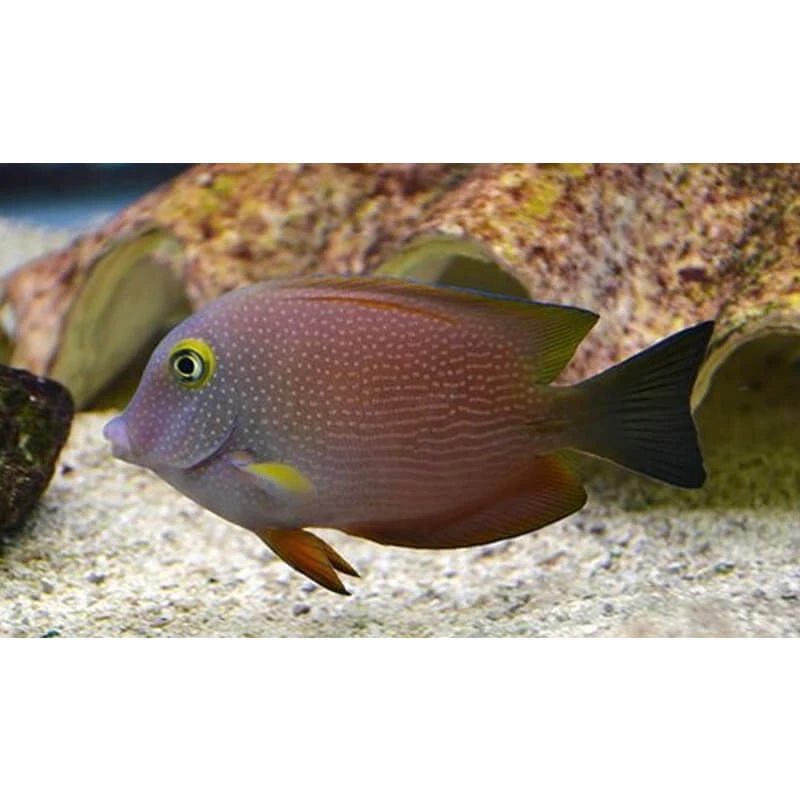
Undernourished kole tangs become lethargic and lose their rich coloration. Properly fed specimens display gorgeous chocolate-brown bodies with brilliant yellow highlights and maintain excellent body condition throughout their 10-15 year lifespan.
The Dr. Reef’s Difference
At Dr. Reef’s Quarantined Fish, every kole tang has been transitioned to accept a variety of prepared foods during our thorough quarantine process. Your new fish arrives already trained to eagerly consume nori, pellets, and frozen foods, eliminating the guesswork and ensuring long-term success.
Why Kole Tangs Deserve Your Attention
Kole tangs combine efficient algae control with peaceful temperament and manageable size (6-7 inches). Their unique bristletooth feeding style tackles algae problems other fish simply can’t address. Feed them well, give them plenty of swimming room and rock to graze, and they’ll reward you with years of dedicated service.