
What Do Clown Gobies Eat?

What Do Clown Gobies Eat? The Complete Feeding Guide for Your Nano Reef Fish
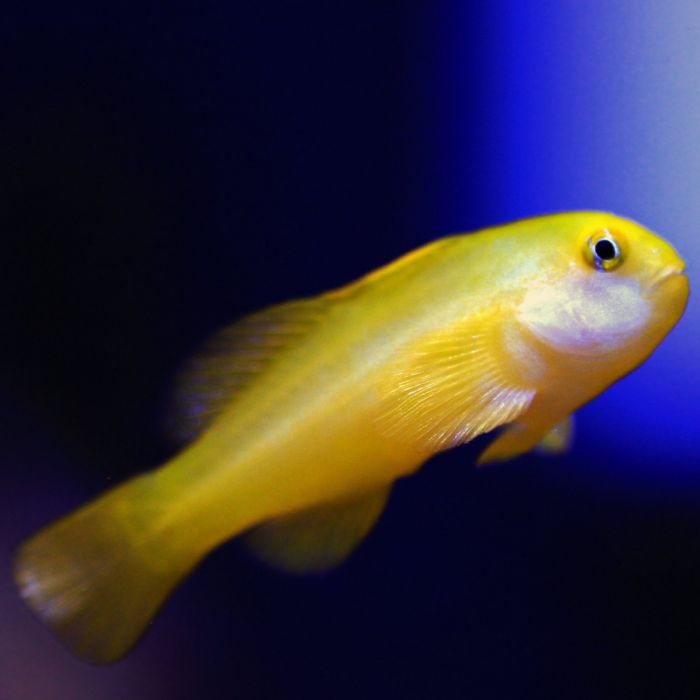
Clown gobies are tiny, impossibly charming fish that perch on coral branches like they own the reef. They barely grow past an inch and a half, they get along with almost everything, and they spend their days nestled on Acropora branches doing their best impression of a reef ornament.
This guide covers exactly what clown gobies eat in the wild and in captivity, how to feed them in a community tank, and why Dr. Reef’s quarantined specimens are already ahead of the curve when they arrive at your door.
What Clown Gobies Eat in the Wild
In their natural Indo-Pacific reef habitat, clown gobies are carnivores. They live among coral branches, particularly Acropora and other branching SPS corals, and spend most of their day picking tiny prey from the coral surface and the surrounding water column.
Their natural diet in the wild consists of:
- Tiny crustaceans – copepods, amphipods, and mysids that live in and around coral branches
- Zooplankton – microscopic planktonic animals drifting through the water column
- Small worms – including polychaete worms found within the reef structure
- Coral mucus and tissue – gobies like the Citron Clown Goby have been observed picking at the soft tissue of their host coral
What Clown Gobies Eat in the Aquarium
Translating a wild diet of copepods and zooplankton into practical aquarium feeding is where most clown goby keepers either succeed or struggle. The good news is that clown gobies are flexible enough to accept a range of prepared foods, as long as the food is small enough and delivered in the right way.
Frozen Foods
Frozen foods are the cornerstone of a healthy captive clown goby diet.
This is the gold standard for clown gobies. Mysis are the right size, nutritionally excellent, and closely mimic the small crustaceans clown gobies eat naturally.
Frozen Brine Shrimp
Brine shrimp is nutritionally inferior to mysis on its own, but as part of a varied diet, it works well. Enriched brine shrimp (soaked in Selcon or similar) provides far more nutritional value than plain frozen brine.
The Three Clown Goby Species at Dr. Reef’s
Dr. Reef’s Quarantined Fish carries three distinct clown goby species, each with slightly different care needs and feeding characteristics. Understanding each one helps you choose the right specimen and feed it correctly.
- Scientific Name: Gobiodon okinawae
- Care Level: Easy
- Availability: Often in stock, quarantined, ready to ship.
The Yellow Clown Goby is the most instantly recognizable species, a tiny, entirely yellow fish that perches confidently on coral branches.
Feeding Notes for Yellow Clown Gobies:
- Primary foods: frozen mysis and brine shrimp
- Will investigate and pick at a fresh clam
- Firmly ignores flakes and freeze-dried foods
- Confident feeder, once acclimated, will dart to the food tube when comfortable
Green Clown Goby
- Scientific Name: Gobiodon atrangulatus
- Care Level: Easy
- Availability: Often in stock, quarantined, ready to ship
The Green Clown Goby is slightly more difficult to find than the yellow variety, which makes a reliable source like Dr. Reef’s especially valuable. The green coloration with orange facial markings makes it one of the most attractive nano fish available.
Feeding Notes for Green Clown Gobies:
- Excellent feeders when healthy, active and enthusiastic
- Opportunistically eat live microfauna, including planarians and copepods
- Accept frozen mysis and brine readily
- The planarian-eating behavior, while not guaranteed, shows just how actively they hunt small prey
Clown Citron Goby
- Scientific Name: Gobiodon citrinus
- Care Level: Easy
- Availability: Periodically in stock, quarantined
Feeding Notes for Citron Clown Gobies:
- Carnivore: natural diet is tiny crustaceans and zooplankton
- May initially feed nocturnally while acclimating to hunting pods at night
- Adjusts to daytime feeding schedule within the first 1-2 weeks
- Once comfortable, it becomes an active and confident feeder
- Trained at Dr. Reef’s during quarantine to eat fine foods suitable for aquarium life
Feeding Frequency and Portion Size
Clown gobies are small fish with fast metabolisms. They need more frequent small meals rather than one or two large feedings.
Recommended feeding schedule:
- Feed 2 times daily for active, healthy adults
- Feed 3 times daily for newly introduced fish, still acclimating
- Each feeding should be tiny, literally a few pieces of mysis or a small puff of brine
- More food at each feeding risks polluting water quality without benefiting the fish
Signs of a well-fed clown goby:
- Active and visible during the day
- Responds to the food tube or feeding cue
- Full, round belly profile (not sunken)
- Vibrant, saturated color
- Perching confidently on coral or rock
Signs of underfeeding:
- Pinched, hollow belly
- Faded coloration
- Lethargy and hiding more than usual
- Not responding to food introduction
- Spending excessive time hunting the rockwork for microfauna
Final Thoughts
Clown gobies are one of those rare marine fish that are genuinely easy to keep once you understand their feeding needs. They’re small enough for nano tanks, peaceful enough for most community setups, and charming enough that you’ll find yourself watching them perch on coral branches far longer than you planned.
The feeding fundamentals are straightforward: give them small, meaty frozen foods twice a day, target feed to make sure they actually get it in a community setting, and maintain a copepod-rich refugium for background nutrition. Skip the flakes and freeze-dried foods entirely. Clown gobies consistently turn their noses up at them.
Starting with a quarantined specimen from Dr. Reef’s gives you the best possible foundation. Their clown gobies arrive already eating frozen mysis and brine, already conditioned to aquarium life, and already past the highest-risk acclimation period. The customer reviews are consistent: healthy on arrival, eating immediately, thriving long-term.
For such a small fish, the clown goby delivers an outsized amount of personality, color, and reef-safe charm. Get the feeding right from the start, and they’ll reward you for years.